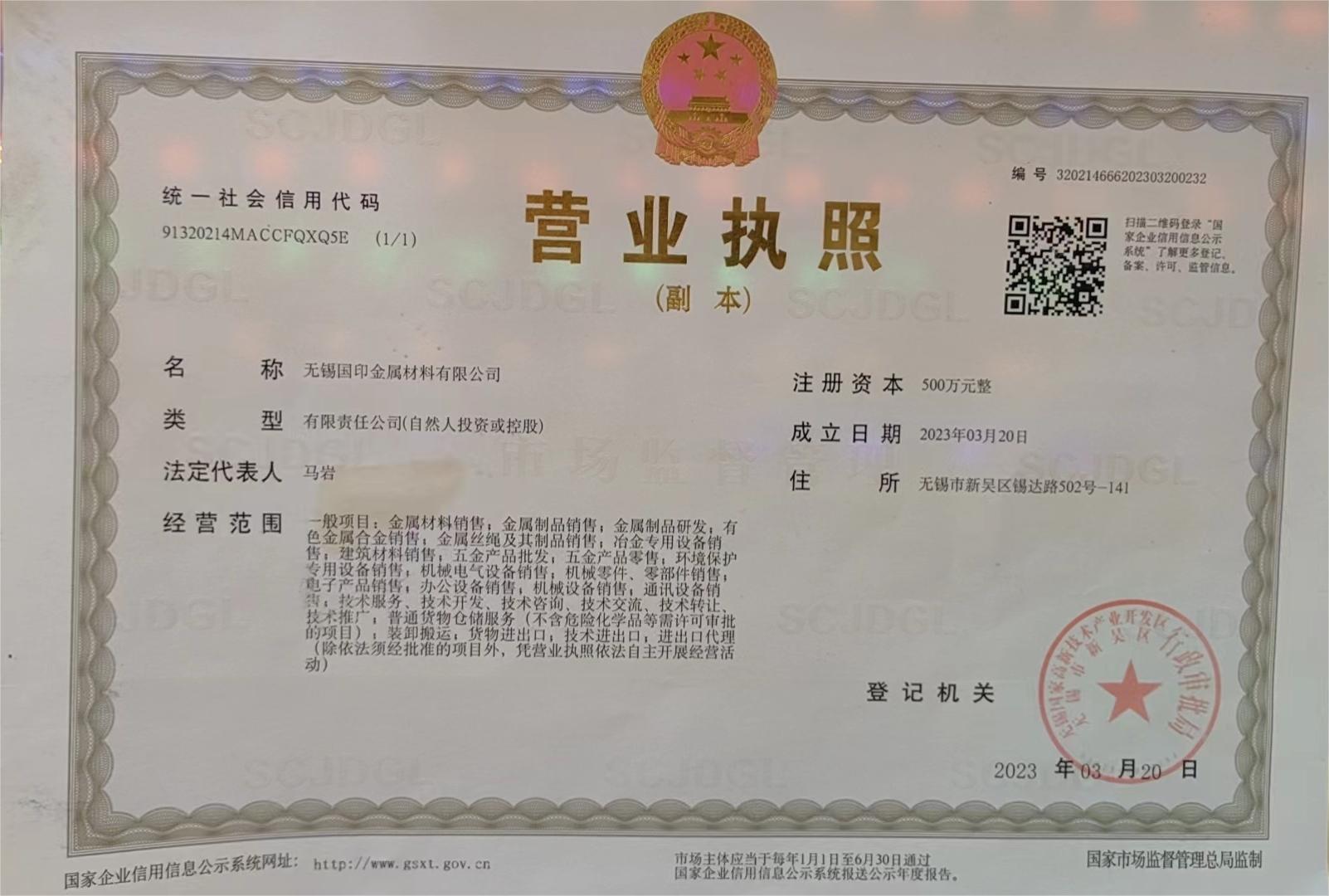
Wuxi Guoyin Metal Materials Co., Ltd.

30
2025
-
12
2025 Cold-Rolled Sheet/Hot-Rolled Coil Price Trend Forecast: Three Major Factors Affecting Steel Costs
Author:
After significant fluctuations in 2024, the Chinese steel market in 2025, especially the cold-rolled plate and hot-rolled coil market, is expected to show a weak and volatile trend with a downward shift in price center[1]. As of late December, the national average price of hot-rolled plate and coil had fallen by more than 6% compared to the same period last year[1]. Looking ahead, the core driver of price trends will return to the cost level. This article will focus on the three key factors affecting steel costs and analyze and predict the price trends of cold-rolled plate and hot-rolled coil in 2025 based on these factors.
I. Raw Material Costs: Decline in Iron Costs and Profit Redistribution
Raw material costs are the basis for determining steel prices, with iron ore and coke prices being the core variables. In 2025, the overall supporting role of this link in steel costs will weaken.
On the one hand, the prices of furnace materials such as iron ore and coke are relatively low, leading to a significant decrease in the cost of iron for steel mills[2]. This has led to a redistribution of profits in the industrial chain, with profits shifting from upstream raw materials and hot rolling to cold rolling processing [2]. Specifically, hot rolling prices weakened due to cost reductions, while cold rolling finished product prices saw smaller declines due to their product characteristics and relatively tight resource conditions, thus expanding the processing profit margin of cold rolling [2][3]. However, this profit structure is fragile. Once raw material prices rebound significantly, they will quickly erode the existing profits of the cold rolling segment [2]. Therefore, the fluctuation range of raw material prices will be the key factor in determining the bottom and top boundaries of steel costs in 2025.
II. Supply and Demand Structure: High Inventory Suppression and “Passive Destocking” Characteristics
The market supply and demand structure indirectly determines the effectiveness of cost support and the upward space of prices by influencing inventory levels. Currently, the hot and cold rolling markets exhibit different structural contradictions.
For hot-rolled coils, although the supply side has contracted due to steel mill maintenance and production cuts, and social inventory has continued to decline, the absolute inventory level is still significantly higher year-on-year, remaining at a historically high level [1]. This high inventory level exerts sustained downward pressure on market prices. Even if costs rebound, it is difficult to effectively translate into strong upward price momentum, and it mainly limits the downward space [1]. On the demand side, there is the dilemma of traditional off-season contraction and slow release of manufacturing orders. Terminal procurement is mainly based on rigid demand and lacks substantial incremental growth [1]. The cold-rolled coil market presents a unique phenomenon of "high capacity utilization and low social inventory" [2]. This low inventory has supported the price of cold-rolled coil to a certain extent, making it more resilient than that of hot-rolled coil [3]. However, it is believed that this "low inventory" is more due to the "low inventory, fast turnover" strategy adopted by traders due to cost pressure and cautious expectations, which is a typical "passive destocking" characteristic [1][2]. At the same time, high capacity utilization means greater supply elasticity. Once demand expectations change or profit-driven production shifts, inventory may accumulate rapidly [2]. In addition, some general material demand has shifted due to the higher cost-effectiveness of galvanized steel, which also has a structural impact on the demand for cold-rolled coil [3]. III. Policies and External Environment: The Dual Impact of Macroeconomic Policies and Export Markets Macroeconomic policies and the external environment are important factors influencing medium- and long-term costs and supply-demand expectations. Domestically, policies such as the "trade-in" program for downstream industries like automobiles and home appliances have directly boosted demand for cold-rolled steel coils [2][3]. However, the pressure on cash flow in the real estate and infrastructure sectors has constrained the recovery of related steel demand [1]. Environmental protection-related production restrictions and other industrial policies will also affect steel mills' production costs and supply schedules in stages. Regarding the external environment, the impact of the steel export market cannot be ignored. In 2025, hot-rolled steel coil exports will face a situation of stable volume but weak prices and pressure on profitability [1]. Although cold-rolled steel coil exports have generally shown an upward trend in the past three years, they are also subject to the potential constraints of phased saturation of overseas demand and trade barrier policies [2]. The performance of the export market directly affects the supply-demand balance of domestic resources, which in turn affects prices and cost transmission. Policy uncertainty requires enterprises to maintain capacity flexibility and closely monitor domestic and international market trends [2]. 2025 Price Trend Outlook Based on the above three factors, the following predictions can be made regarding the price trends of cold-rolled sheets and hot-rolled coils in 2025: The hot-rolled sheet and coil market is expected to continue its weak and volatile pattern. Although raw material costs may provide temporary bottom support, high social inventory and weak end-user demand will severely restrict the upward space of prices [1]. The market will exhibit the characteristics of "not weak in the off-season and not strong in the peak season," and the price fluctuation range is expected to narrow compared to previous years [1]. Cold-rolled sheet and coil prices may show relative resilience, but with significant upward resistance. Their relatively firm prices are mainly due to the current low inventory structure and processing profits transferred from hot-rolled [2][3]. However, this support is not solid: on the one hand, an increase in upstream hot-rolled costs will squeeze its profits; on the other hand, the low inventory under "passive destocking" is not driven by strong active demand, and high capacity may at any time transform into supply pressure [2]. Therefore, although cold-rolled prices may be stronger than hot-rolled prices, it is difficult for them to break out of the independent upward trend, and they will more likely fluctuate with costs and macro sentiment. Overall, the steel market in 2025 will operate in a complex environment characterized by declining cost support, a weak supply-demand balance, policy support, but weak demand. For market participants, closely monitoring changes in pig iron costs, the rate of inventory reduction, and the specific effects of macroeconomic policies will be key to understanding price trends.
Key words:
Related news
Wuxi Guoyin Metal Materials Co., Ltd.
E-mail: sales01@guoyinmetal.com
WhatsApp: +86-17663729118
Tel: +86-17663729118
Address:No. 502-141, Xida Road, Xinwu District, Wuxi City, Jiangsu Province