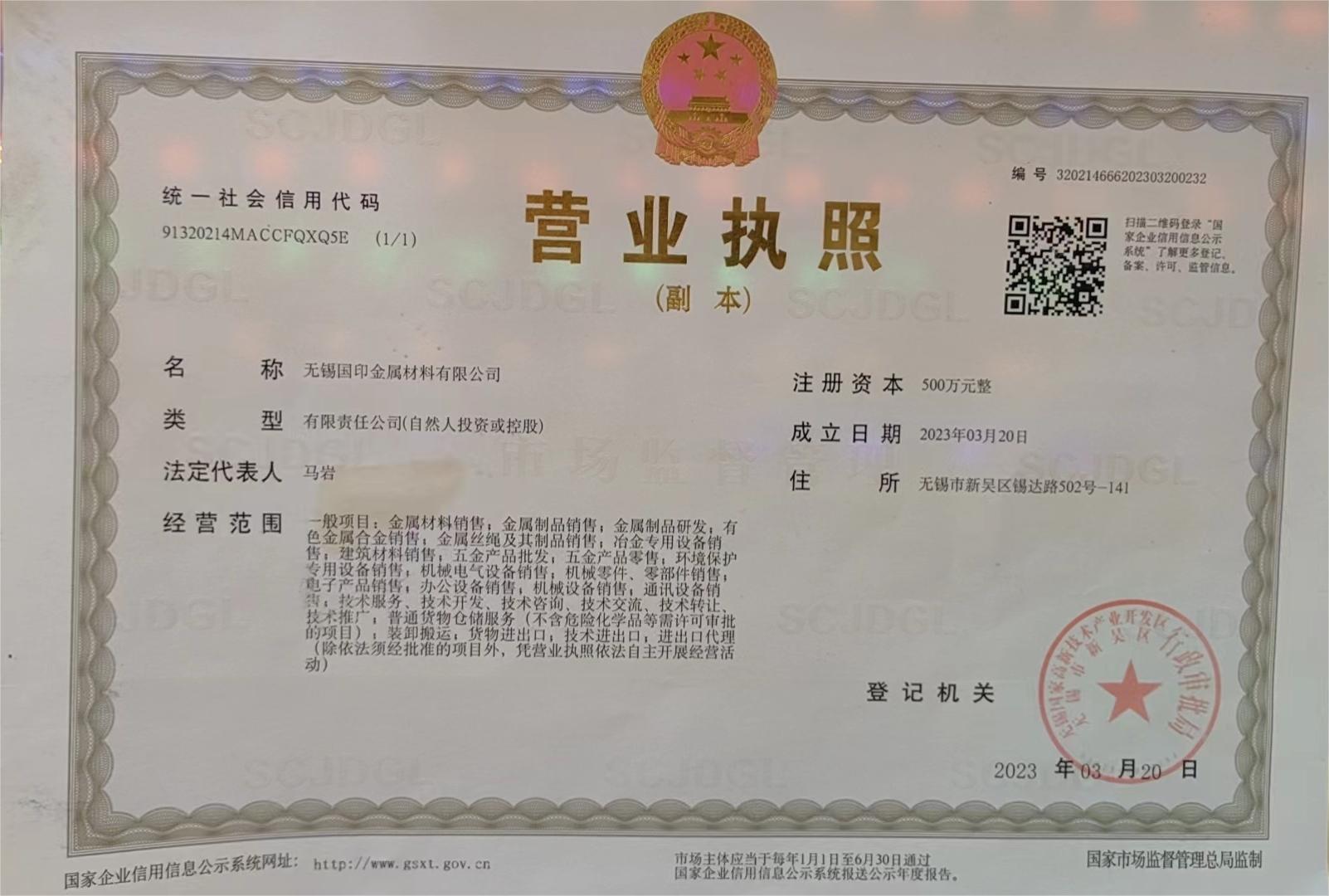
Wuxi Guoyin Metal Materials Co., Ltd.

09
2025
-
12
A Comprehensive Analysis of the Properties and Applications of Carbon Steel Plates
Author:
Carbon steel plate, as an indispensable basic material in modern industry, has become a crucial pillar supporting the development of industrial civilization due to its unique performance advantages and wide range of applications. This article will provide a comprehensive analysis of carbon steel plate from the aspects of material characteristics, classification, manufacturing process, and application fields.
I. Core Characteristics of Carbon Steel Plate
Carbon steel plate is mainly composed of iron and carbon, with a carbon content typically ranging from 0.05% to 2.1%, and contains small amounts of elements such as silicon, manganese, phosphorus, and sulfur. Its characteristics can be summarized in the following three aspects:
**Excellent Mechanical Properties** Carbon steel plate possesses high strength, high hardness, and good toughness, with a tensile strength exceeding 500 MPa, especially prominent in high-carbon steel. This characteristic enables it to withstand large mechanical stresses and impact loads, making it suitable for high-load operating conditions.
**Stable Thermal Properties** Even at high temperatures, carbon steel plate maintains high strength and hardness, and is not prone to softening or deformation. For example, some specially treated carbon steel plates can operate stably for extended periods below 510℃, making them ideal materials for high-temperature pressure vessels.
Excellent Processing Performance
Carbon steel sheets are easy to cut, bend, weld, and polish. Their plasticity and ductility allow them to adapt to complex forming requirements. Furthermore, carbon steel sheets have good surface treatment properties, and their corrosion resistance can be enhanced through coatings or plating.
II. Classification and Specifications of Carbon Steel Sheets
Based on carbon content and manufacturing process, carbon steel sheets can be classified into the following categories:
Classification by Carbon Content
Low Carbon Steel (C≤0.25%): Good plasticity, easy to cold work and weld, commonly used in automobile bodies, building structures, etc.
Medium Carbon Steel (0.25%<C≤0.6%): Balanced strength and toughness, suitable for gears, shafts, and other mechanical parts.
High Carbon Steel (C>0.6%): High hardness, strong wear resistance, mostly used in the manufacture of knives, springs, and other tools.
Classification by Manufacturing Process
Forged Steel: Manufactured through forging, possessing high density and mechanical properties.
Cast steel: Formed through casting processes, suitable for manufacturing parts with complex shapes.
Specifications: The specifications of carbon steel plates mainly include thickness, width, and length. For example, thin plates are typically between 0.2-4 mm thick, while thick plates can reach thicknesses of over 200 mm. Different specifications of carbon steel plates are suitable for different applications; for example, thin plates are used in the electrical and electronics industries, while thick plates are used in shipbuilding and building structures.
III. Manufacturing Process of Carbon Steel Plates
The manufacturing of carbon steel plates is a complex and precise process, mainly including the following steps:
Raw Material Preparation: Select high-quality iron ore, coke, and limestone as raw materials to ensure the purity and chemical stability of the materials.
Smelting and Impurity Removal: Melt the raw materials in a blast furnace, producing molten steel through a high-temperature reduction reaction. Then, slag removal and impurity removal treatments are performed to improve the purity of the molten steel.
Pouring and Forming: Pour the treated molten steel into a mold, cool, and form it into a steel plate or billet. The cooling rate must be controlled during this process to avoid the generation of internal stress and defects. Heat Treatment: Heat treatment, such as quenching and tempering, is applied to the formed steel plates to improve their mechanical properties and wear resistance. For example, quenching can give the steel plate higher hardness and strength.
Machining and Finishing: After heat treatment, the steel plates undergo cutting, bending, polishing, and other processing operations to meet the needs of different fields. Finally, after rigorous quality testing, the carbon steel plates are ready for market use.
IV. Application Areas of Carbon Steel Plates: Carbon steel plates play an important role in many industries due to their excellent performance:
Construction and Infrastructure: Carbon steel plates are a key material in building structures, used to manufacture reinforcing bars, steel structural frames, and bridge components. For example, high-strength carbon steel plates are often used in the core tube structure of skyscrapers to withstand enormous vertical and horizontal loads.
Machinery Manufacturing: In the machinery industry, carbon steel plates are used to manufacture parts such as gears, shafts, and connecting rods, which require high strength and wear resistance. Medium carbon steel, due to its good machinability, has become the preferred material for machine parts.
* **Automotive Industry:** Carbon steel sheets are widely used in automobile manufacturing for body structural components, chassis, and engine parts. Low-carbon steel, due to its good plasticity and weldability, is particularly suitable for stamping automobile bodies.
* **Shipbuilding and Marine Engineering:** Shipbuilding requires a large amount of carbon steel sheets to withstand the corrosion and impacts of the marine environment. High-strength and weather-resistant carbon steel sheets are the main material for hull structures, ensuring the safety and durability of ships.
* **Electrical and Electronics Industry:** Carbon steel sheets have good electromagnetic properties and are used to manufacture electrical equipment components such as transformer cores, motor stators, and rotors. Their high magnetic permeability and low loss characteristics improve the efficiency and reliability of electrical equipment.
* **Market Prospects and Challenges of Carbon Steel Sheets:** With the continuous advancement of industrial technology, the application fields of carbon steel sheets will further expand. In emerging fields such as new energy, aerospace, and high-end equipment manufacturing, the demand for high-performance carbon steel sheets will continue to grow. However, carbon steel sheets also face some challenges, such as the susceptibility of low-carbon steel to rust and the insufficient toughness of high-carbon steel. In the future, through material modification and process optimization, the performance of carbon steel plates will be further improved, providing stronger support for industrial development.
Conclusion: With its unique performance advantages and wide range of applications, carbon steel plates have become an indispensable material in modern industry. From construction to machinery, from automobiles to ships, carbon steel plates are ubiquitous. With technological advancements and process improvements, carbon steel plates will continue to play a vital role in the industrial field, propelling human civilization to higher levels.
Key words:
Related news
Wuxi Guoyin Metal Materials Co., Ltd.
E-mail: sales01@guoyinmetal.com
WhatsApp: +86-17663729118
Tel: +86-17663729118
Address:No. 502-141, Xida Road, Xinwu District, Wuxi City, Jiangsu Province