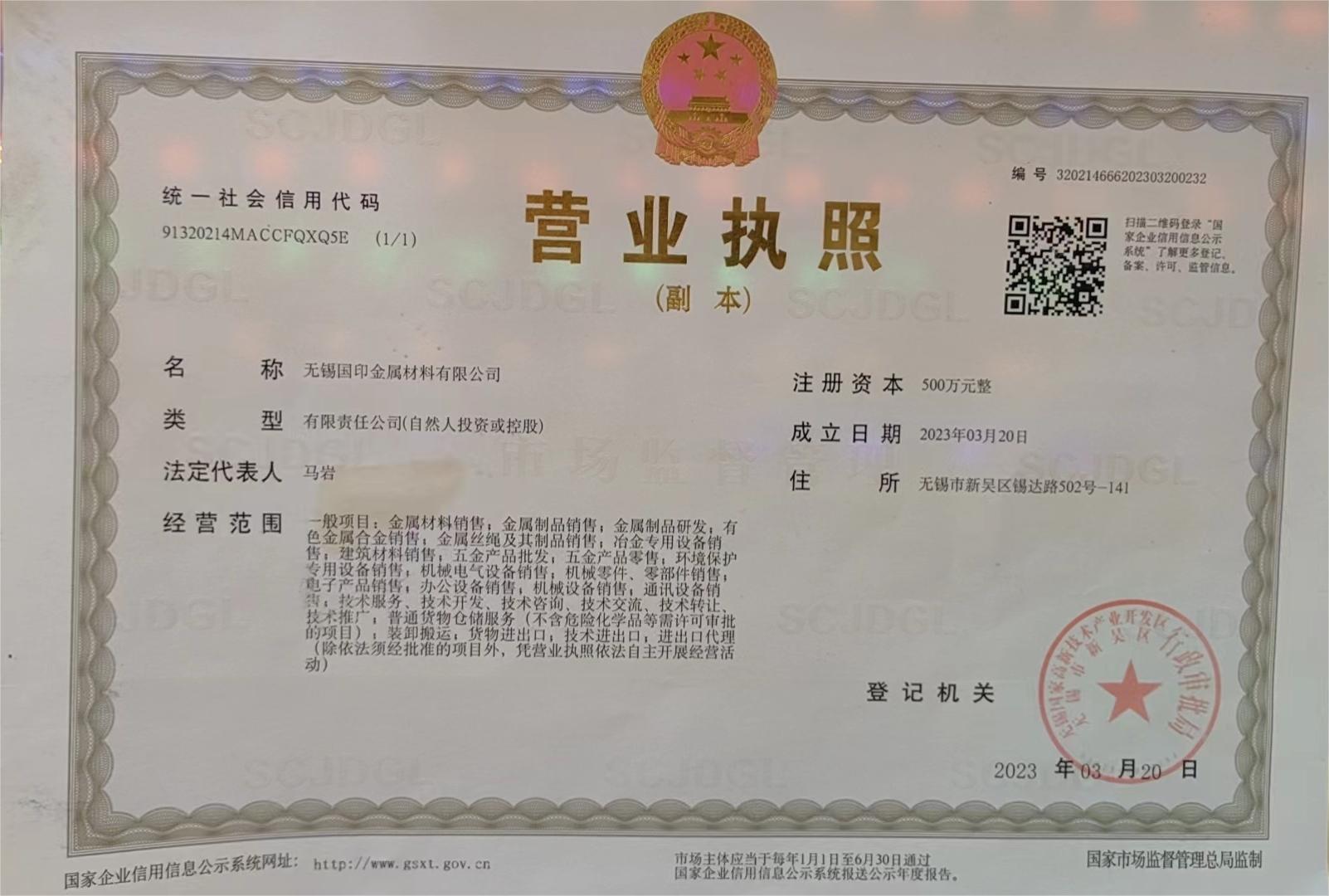
Wuxi Guoyin Metal Materials Co., Ltd.

16
2025
-
05
Channel steel foreign trade guide: from specification customization to export certification, a one-stop procurement strategy
Author:
At a time when global infrastructure and manufacturing are booming, channel steel has become a popular category in international steel trade with its excellent load-bearing performance and flexible adaptability. However, from specification customization to export certification, every link hides risks and opportunities. How to efficiently purchase high-quality channel steel in a complex foreign trade process? This article will start from the core links and provide you with a one-stop solution.
1. Accurate positioning needs: key elements of channel steel specification customization
(I) Analysis of basic parameters of channel steel
Channel steel is a long steel strip with a grooved cross-section. Its specifications are mainly determined by three dimensions: height (h), leg width (b), and waist thickness (d) (such as 10# channel steel, height is 100mm). In addition, the material (such as Q235B, Q355B, SS400, 304 stainless steel) and surface treatment (hot-dip galvanizing, cold-dip galvanizing, spray painting) directly affect its performance and application scenarios.
(II) Customized demand matching
Construction engineering scenario: high-rise buildings or bridge projects require large-size, high-strength channel steel (such as 25#, 30#, material Q355B), and attention should be paid to its bending strength and welding performance; small-size channel steel (such as 8#, 10#) is suitable for small steel structures (such as warehouse shelves).
Mechanical manufacturing scenario: Mechanical parts have extremely high dimensional accuracy requirements for channel steel (within tolerance ±0.5mm), and need to adapt to the installation requirements of specific equipment, which may involve non-standard customization (such as unequal-side channel steel, special length cutting).
Special environmental requirements: Marine engineering and chemical projects require corrosion-resistant channel steel (such as 316L stainless steel or hot-dip galvanizing); cold regions require low-temperature resistant materials (such as Q355D).
(III) Key points for communication with suppliers
When communicating with suppliers, it is necessary to provide detailed technical parameters (such as GB/T 706 standard, ASTM A36 standard), drawings or samples, and clarify the delivery cycle (customized products usually take 15-30 days) and the minimum order quantity (MOQ, generally 5-20 tons).
2. Customs clearance essentials: export certification and compliance requirements
(I) Global mainstream certification system
Chinese standards: Compliance with GB/T 706 (hot-rolled steel standard) is the basis for domestic production and export, and some products need to pass China Classification Society (CCS) certification (applicable to shipbuilding).
European and American markets:
The United States requires ASTM A36/A572 certification, and some states require UL certification;
The European Union needs to comply with EN 10025 standards and pass CE certification to ensure that products meet health, safety and environmental protection requirements.
Asian market: Japan's JIS G3192 standard, South Korea's KS D 3505 standard, and localized certification in Southeast Asian countries (such as Indonesia's SNI certification) are the key to entering the local market.
(II) Certification process and precautions
Plan ahead: The certification cycle usually takes 2-3 months. It is recommended to start immediately after the order is confirmed to avoid delays in delivery.
Document preparation: Material certification, mechanical properties test report, production process documents, etc. are required. Some certifications require on-site factory inspection (such as CE certification).
Third-party testing: Select authoritative organizations (such as SGS, BV) for testing to ensure that the report is recognized by the international market.
(III) Avoid trade risks
Tariffs and trade barriers: Pay attention to the import tariff rates of target countries (such as the United States imposes a 25% tariff on some steel products) and anti-dumping policies.
Proof of origin: Provide FORM A (GSP certificate of origin) or FORM E (China-ASEAN Free Trade Area certificate of origin) to enjoy tariff preferences.
3. Full-process procurement strategy: from ordering to delivery
(I) Supplier screening standards
Qualification review: Give priority to factories that have passed ISO 9001 quality management system certification and have foreign trade export experience, and check their historical order cases and customer reviews.
Production capacity assessment: Inspect rolling mill equipment (such as high-precision cold bending forming machines), annual production capacity (≥50,000 tons) and customized response speed (such as providing samples within 7 days).
(II) Key points for contract signing
Clear terms: Specify specifications, material standards, certification requirements, unit price, delivery period, payment method (such as 30% advance payment + 70% payment upon bill of lading) and liability for breach of contract in the contract.
Risk clause: Agree on the method of bearing losses caused by force majeure such as certification delays and exchange rate fluctuations.
(III) Logistics and delivery optimization
Packaging protection: Use bundling + moisture-proof packaging, and add plastic film to galvanized channel steel to prevent scratches or rust during transportation.
Transportation plan: Choose full container load (FCL) or less than container load (LCL) according to the volume of goods, negotiate freight with long-term freight forwarding companies to reduce costs; require suppliers to provide photos of loading to ensure that the goods are intact.
4. Industry Trends: Digitalization and Green Transformation
Digital procurement: Online inquiry, order tracking and logistics visualization are realized through steel e-commerce platforms, shortening the procurement cycle by more than 30%.
Green supply chain: The demand for low-carbon steel in the European and American markets has surged. Choosing suppliers that use electric furnace steelmaking technology and have carbon footprint certification can seize the opportunity of environmentally friendly trade.
Conclusion
Foreign trade procurement of channel steel is a comprehensive game of technology, experience and resources. From the precise control of specification customization, to the compliance layout of export certification, to the full process risk control, every link requires rigorous planning. Choosing suppliers with customization capabilities, multiple certification qualifications and a global service network is the core to ensure efficient procurement and reduce costs.
Key words:
Related news
Wuxi Guoyin Metal Materials Co., Ltd.
E-mail: sales01@guoyinmetal.com
WhatsApp: +86-17663729118
Tel: +86-17663729118
Address:No. 502-141, Xida Road, Xinwu District, Wuxi City, Jiangsu Province