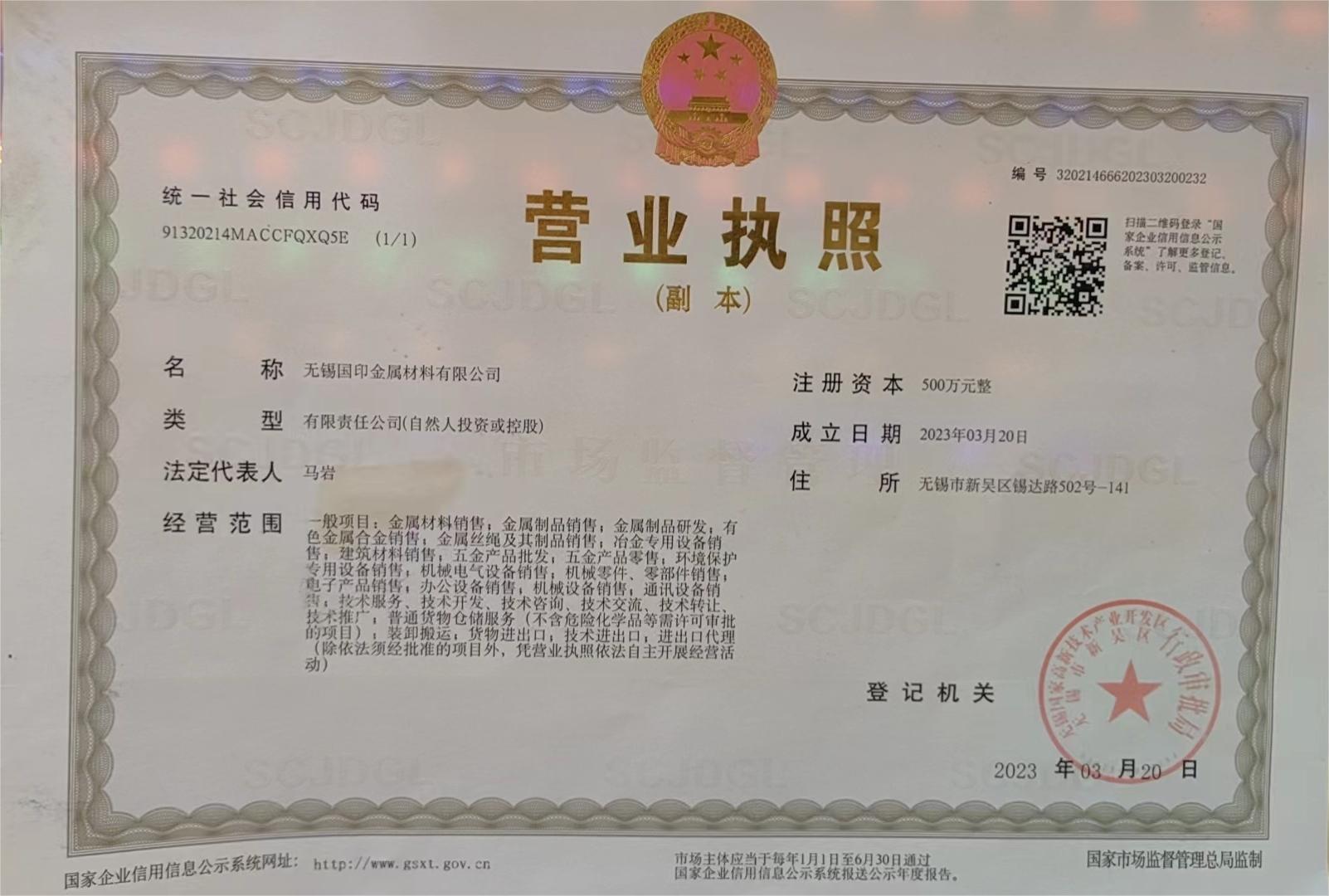
Wuxi Guoyin Metal Materials Co., Ltd.

16
2025
-
05
The first choice for global procurement: high-quality flat steel to meet diversified foreign trade needs.
Author:
Today, as global trade becomes increasingly close, steel, as the "skeleton" of industrial development, its quality and supply capacity have become the core concerns of international procurement. As an important member of the steel category, flat steel has become a popular choice for global buyers with its flexible specification adaptability, excellent mechanical properties and wide application scenarios. This article will deeply analyze the advantages of high-quality flat steel, the characteristics of foreign trade market demand, and how to achieve efficient procurement through professional channels.
I. High-quality flat steel: an all-round player in industrial scenarios
Flat steel is a long steel strip with a rectangular cross-section, which has the characteristics of high flatness, stable dimensional accuracy, and excellent surface quality. Its core advantages are reflected in:
1. Double guarantee of material and performance
Multiple material selection: covering Q235, Q355, 304/316 stainless steel, galvanized steel and other materials, meeting the differentiated needs of corrosion resistance (such as marine engineering, chemical equipment), high strength (such as bridge structures, heavy machinery), and low temperature resistance (such as polar facilities).
Strict process control: through hot rolling, cold rolling, galvanizing, polishing and other processes, ensure that the tensile strength, yield strength, elongation and other indicators of flat steel meet international standards (such as GB/T 706, ASTM A36, EN 10025).
2. Flexible specifications, suitable for global projects
Wide size coverage:
Width: 10~300mm (tolerance ±0.5mm~±1.0mm);
Thickness: 3~60mm (tolerance ±0.3mm~±0.5mm);
Length: can be customized 6~12m or cut according to customer needs.
Special specification customization: support non-standard flat steel production (such as unequal flat steel, bevel flat steel) to meet the needs of special-shaped engineering design.
3. Diversified application scenarios
Construction engineering: used for steel structure frames, embedded parts, floor slab supports, etc., especially suitable for high-rise building projects in Southeast Asia, the Middle East and other infrastructure active areas.
Mechanical manufacturing: As the raw material of mechanical parts (such as guide rails and connecting plates), it is exported to manufacturing powerhouses such as Europe, America, Japan and South Korea.
Transportation field: used for ship decks, train carriage frames, highway guardrails, etc., in compliance with EU CE certification, US AISC standards and other export requirements.
Energy industry: adapted to oil platforms, wind power bases, photovoltaic brackets and other scenarios, meeting the dual needs of new energy projects for lightweight steel and weather resistance.
II. Foreign trade market: core trends and challenges in flat steel procurement
1. Demand area and industry characteristics
Southeast Asian market: mainly in construction engineering and manufacturing, prefers Q235B flat steel, focuses on cost-effectiveness and fast delivery, and Vietnam, Indonesia and Malaysia are the main importing countries.
European and American markets: strict material standards (such as ASTM A572 Grade 50) and environmental protection requirements (such as RoHS directive), strong demand for stainless steel flat steel and hot-dip galvanized flat steel, mostly used in high-end equipment manufacturing and municipal engineering.
Middle East and African market: Infrastructure projects drive a large amount of demand, and the purchase volume of galvanized flat steel (anti-corrosion) and large-size flat steel (for heavy structures) is prominent, with Saudi Arabia, the United Arab Emirates, and Nigeria as representative countries.
2. Procurement pain points and solutions
Standard differences: Different countries have different requirements for the dimensional tolerance, mechanical properties, and surface treatment of flat steel (such as the difference between British standard BS 4 flat steel and national standard GB/T 706).
Response: Choose suppliers with multi-standard certification (such as ISO, ASTM, EN) to support customized production.
Logistics and cost: Steel is large in volume and heavy in international transportation, and the cost of sea transportation accounts for a high proportion, and the risk of rust needs to be prevented (such as the impact of salt spray environment on bare steel).
Response: Use bundling packaging + waterproof coating, sign an agreement with long-term international logistics companies to reduce transportation costs and ensure delivery timeliness.
Supplier qualification risks: Some small and medium-sized suppliers have problems such as inferior products and delayed delivery, which affect the progress of the project.
Response: Give priority to companies that have passed ISO 9001 quality management system certification and have foreign trade export experience (such as holding certificates of origin and commodity inspection certificates).
III. Global procurement strategy: How to find reliable flat steel suppliers?
1. Professional platform screening method
B2B cross-border platform: Through Alibaba International Station, Made-in-China and other platforms, accurately search for suppliers by "material + specification + certification", and view suppliers' transaction records, customer reviews and factory inspection reports.
Industry exhibition channels: Participate in exhibitions such as the Stuttgart International Metalworking Exhibition (AMB) in Germany and the China International Iron and Steel Industry Exhibition (CISIE), directly connect with factories, and conduct on-site inspections of production processes and quality inspection processes.
2. Key indicator evaluation
Production capacity: Inspect rolling mill equipment (such as reversible rolling mill, continuous rolling mill), annual production capacity (such as ≥100,000 tons), and customized production response speed (such as providing samples within 7 days).
Quality inspection system: whether equipped with equipment such as spectrometers, tensile testing machines, ultrasonic flaw detectors, etc., and whether third-party test reports (such as SGS, BV certification) can be provided.
Service capabilities: Support multiple payment methods such as letters of credit (L/C) and telegraphic transfers (T/T), and provide one-stop services such as export customs declaration and ocean freight booking.
3. Cooperation model suggestions
Small batch trial order: 5~20 tons of samples can be purchased for the first cooperation to test product quality and delivery time and reduce cooperation risks.
Long-term agreement: Sign an annual framework agreement with high-quality suppliers to lock in prices and production capacity, and enjoy bulk purchase discounts (such as a purchase volume of ≥100 tons, a unit price reduction of 3%~5%).
IV. Future trends: Greening and intelligence drive the upgrade of flat steel foreign trade
Green manufacturing demand: Policies such as the EU Carbon Border Adjustment Mechanism (CBAM) promote the purchase of low-carbon steel. It is recommended to choose suppliers that use electric furnace short-process steelmaking and renewable energy production to obtain "green steel" certification.
Digital procurement: Through the steel e-commerce platform, online inquiry, order management and logistics tracking can be realized, shortening the procurement cycle (for example, the traditional process takes 20 days, and digitalization can be compressed to within 10 days).
Conclusion
High-quality flat steel has become an indispensable basic material in the global industrial chain due to its performance advantages and flexible adaptability. In foreign trade procurement, accurately grasping regional market demand, strictly screening supplier qualifications, and relying on professional channels to optimize procurement processes are the keys to ensure project success. With the recovery of global infrastructure and manufacturing, flat steel trade will usher in a broader development space, and suppliers with quality, service and innovation capabilities will eventually stand out in international competition.
Key words:
Related news
Wuxi Guoyin Metal Materials Co., Ltd.
E-mail: sales01@guoyinmetal.com
WhatsApp: +86-17663729118
Tel: +86-17663729118
Address:No. 502-141, Xida Road, Xinwu District, Wuxi City, Jiangsu Province