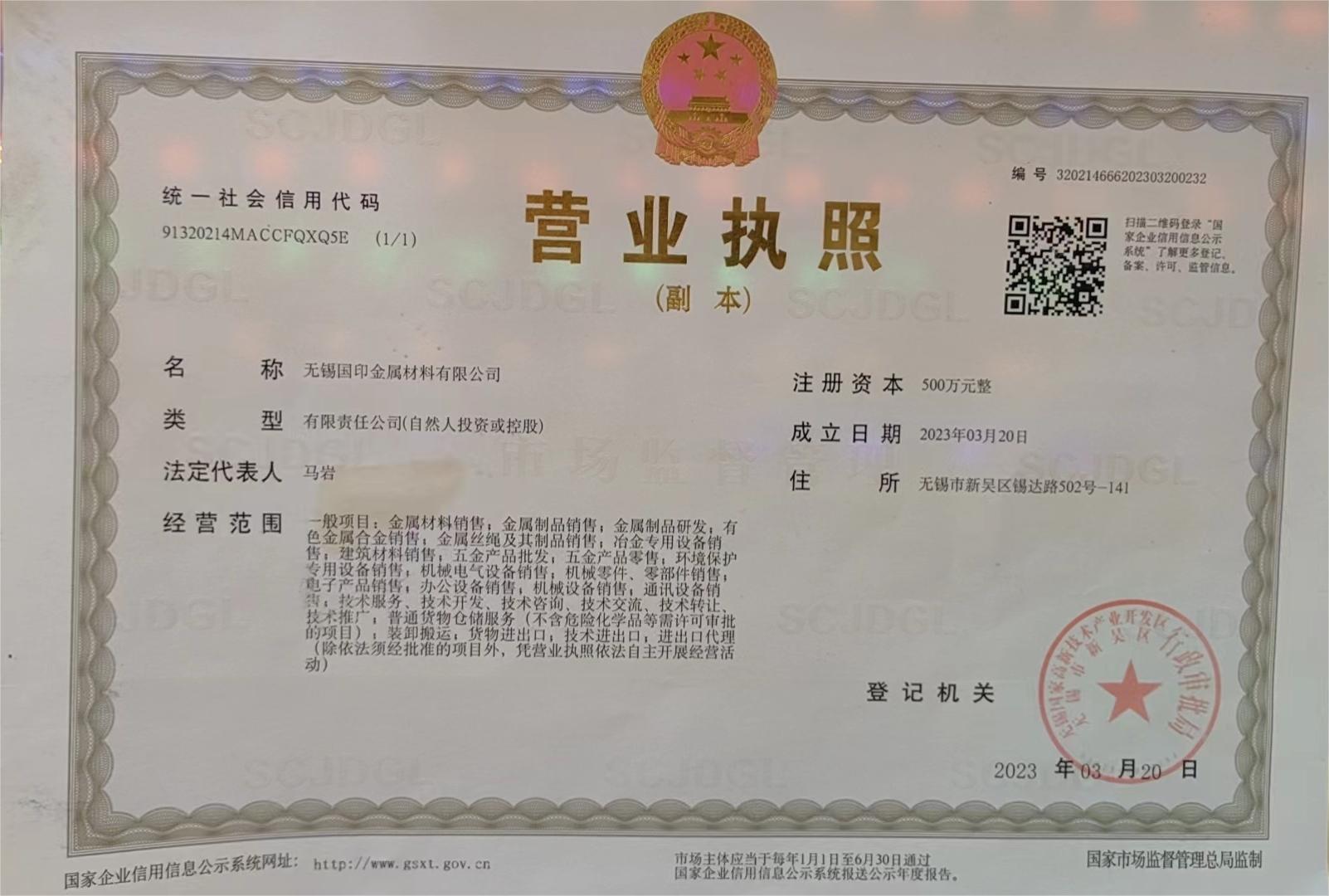
Wuxi Guoyin Metal Materials Co., Ltd.

28
2025
-
03
Flat steel production process and quality control points
Author:
Flat steel is a wide and thin steel material, usually rectangular or square, with high strength, good plasticity and toughness, as well as corrosion resistance and wear resistance. Its production process and quality control points are crucial to ensure the quality of flat steel.
1. Flat steel production process
The production process of flat steel mainly includes the following steps:
Raw material preparation: Prepare raw materials such as molten iron, scrap steel, and alloys for steelmaking. Ensure that the chemical composition of the raw materials meets the standard requirements to ensure the mechanical properties and corrosion resistance of the flat steel.
Steelmaking: Add molten iron to a converter or electric furnace, remove impurities in the molten iron by blowing oxygen, adding carbon, adding alloys, etc., and add the required elements to obtain molten steel with qualified composition.
Steel treatment: Deoxidize, remove slag, adjust the composition, etc. of the molten steel to improve the quality of the molten steel.
Continuous casting: Continuously pour the treated molten steel into ingots. Continuous casting technology is an important link in flat steel production. The key lies in controlling the composition, temperature and pouring speed of molten steel to ensure the quality and stability of the ingot.
Rolling: The ingot after continuous casting is rolled to make it into the required flat steel product. The key to rolling technology is to control the rolling temperature, rolling speed and rolling pass to ensure the dimensional accuracy, surface quality and mechanical properties of the flat steel.
Cooling and straightening: Cool and straighten the flat steel after rolling to eliminate internal stress and improve the straightness and accuracy of the flat steel.
Surface treatment: Surface treatment of flat steel products, such as spraying, electroplating, hot dipping, etc., to improve its corrosion resistance and aesthetics.
2. Key points of quality control
In the production process of flat steel, the key points of quality control mainly include the following aspects:
Chemical composition control: Accurately control the chemical composition of raw materials to ensure that they meet the standard requirements.
Strictly control the temperature and time during smelting, continuous casting and rolling to keep the chemical composition of flat steel stable.
Mechanical property control:
The mechanical properties of flat steel include tensile strength, yield strength, elongation and impact toughness.
By adjusting the rolling process parameters and heat treatment process, ensure that the mechanical properties of flat steel reach the best state.
Surface quality control:
The surface quality of flat steel includes surface roughness, pitting, scratches and folding.
Select suitable rollers and reasonable rolling process parameters, and strengthen surface inspection and cleaning to ensure that the surface quality of flat steel meets the standard requirements.
For unqualified surface quality, it should be processed and repaired in time.
Dimensional accuracy control:
Through precise rolling process and measurement methods, ensure that the dimensional accuracy of the thickness, width and length of the flat steel meets the design requirements.
Quality inspection and monitoring:
Multiple quality inspections are carried out during the production process, including chemical composition, mechanical properties, dimensional accuracy and surface quality.
Advanced inspection equipment and methods, such as ultrasonic flaw detection and magnetic particle flaw detection, are used to ensure that the quality of flat steel meets relevant standards and requirements.
To sum up, the production process and quality control points of flat steel involve many aspects, and it is necessary to strictly control the process parameters and quality standards of each link to ensure that the quality of flat steel meets market demand and application requirements.
Key words:
Related news
Wuxi Guoyin Metal Materials Co., Ltd.
E-mail: sales01@guoyinmetal.com
WhatsApp: +86-17663729118
Tel: +86-17663729118
Address:No. 502-141, Xida Road, Xinwu District, Wuxi City, Jiangsu Province