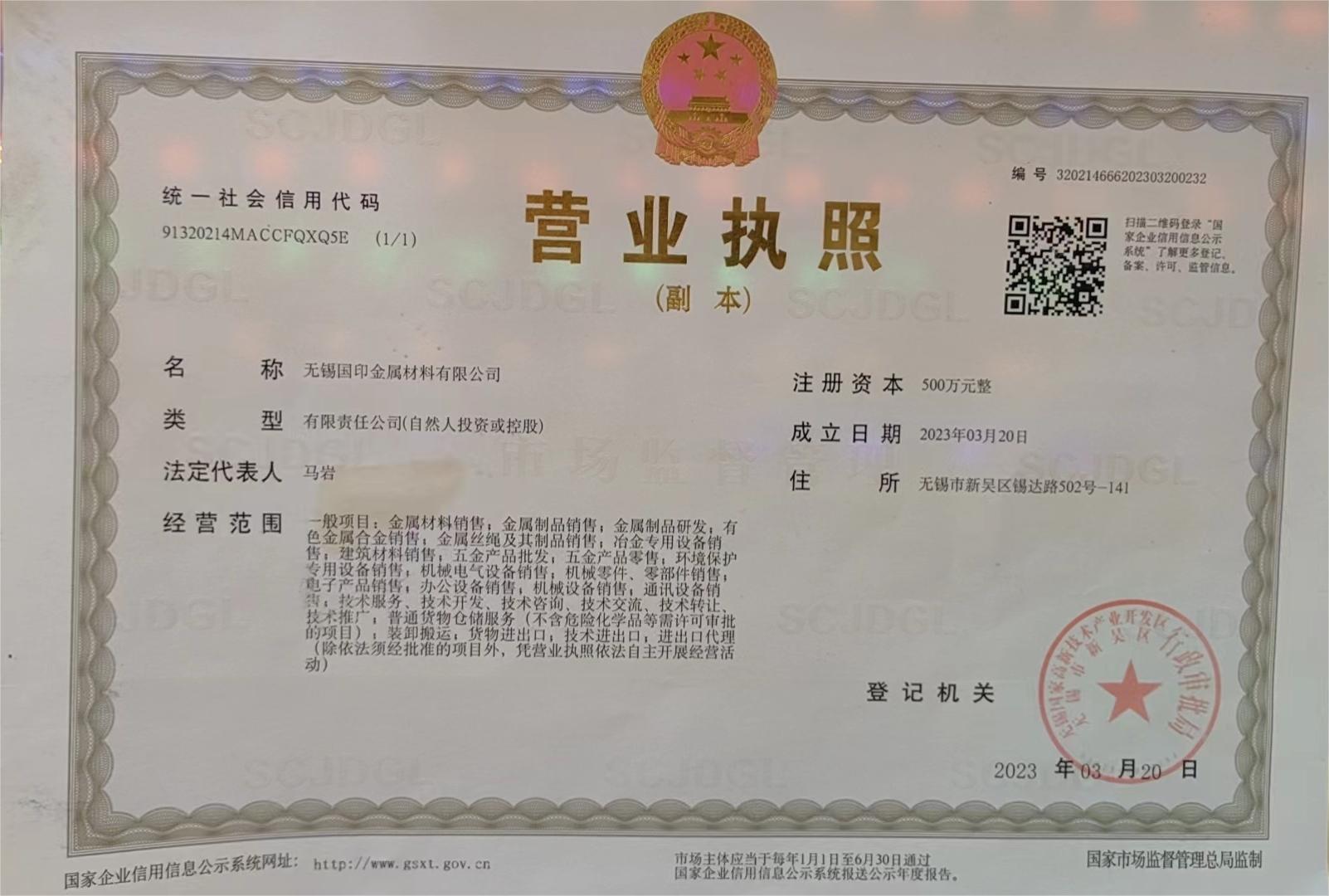
Wuxi Guoyin Metal Materials Co., Ltd.

27
2025
-
03
Corrosion resistance and maintenance tips of carbon steel pipes
Author:
1. Corrosion resistance of carbon steel pipes
The main components of carbon steel pipes are iron and carbon, and their corrosion resistance is relatively poor. In a humid or chemical-rich environment, carbon steel pipes are prone to oxidation corrosion and rust. In order to improve the corrosion resistance of carbon steel pipes, a variety of treatment methods can be adopted, such as galvanizing, coating or using stainless steel materials. These treatment methods can increase the corrosion resistance of carbon steel pipes to a certain extent, making them have good durability in humid or corrosive environments.
2. Maintenance tips for carbon steel pipes
Regular inspection:
Regular inspection is the basis for the maintenance and maintenance of carbon steel pipes. Through regular inspections, problems with the pipeline, such as corrosion, leakage, deformation, etc., can be discovered in time.
The inspection content includes the surface condition, connection parts, support structure, etc. of the pipeline.
The inspection cycle is determined according to factors such as the use environment and medium properties of the pipeline, generally at least once a year.
Cleaning and rust removal:
With the increase of use time, some dirt, rust, etc. may accumulate on the surface of the carbon steel pipe. These dirt and rust not only affect the appearance of the pipeline, but may also accelerate the corrosion of the pipeline.
Therefore, it is necessary to clean and rust the pipeline regularly. Water or detergent can be used for cleaning, and mechanical or chemical rust removal can be used for rust removal.
Anti-corrosion treatment:
Anti-corrosion treatment is an important part of the maintenance and care of carbon steel pipes. Although the galvanized layer or other coatings themselves have certain anti-corrosion properties, these protective layers may be damaged or worn during long-term use.
Therefore, it is necessary to regularly treat the pipeline with anti-corrosion to make up for the lack of protective layer. Anti-corrosion treatment can be carried out by coating anti-corrosion, cathodic protection and other methods. Coating anti-corrosion is to apply a layer of anti-corrosion paint on the surface of the pipeline to form a protective film; cathodic protection is to make the pipeline a cathode through electrochemical methods, thereby slowing down the corrosion rate of the pipeline.
Repair and replacement:
During the inspection process, if serious problems are found in the pipeline, such as severe corrosion, leakage, deformation, etc., it is necessary to repair or replace it.
During maintenance, corresponding measures need to be taken according to the specific circumstances of the problem, such as replacing damaged parts and repairing leaks.
If the pipeline can no longer meet the use requirements, it needs to be replaced. When replacing, it is necessary to select pipeline materials that meet the requirements and strictly follow the relevant specifications and standards.
Archives management:
Establishing and maintaining pipeline archives is an important auxiliary means for the maintenance and maintenance of carbon steel pipes.
The archives should contain basic information, inspection records, maintenance records, etc. of the pipeline.
Through archive management, we can fully understand the use and maintenance history of the pipeline, and provide a reference for subsequent maintenance and maintenance.
In summary, the corrosion resistance of carbon steel pipes is relatively poor, but by taking appropriate maintenance measures, such as regular inspection, cleaning and rust removal, anti-corrosion treatment, repair and replacement, and archive management, its service life can be extended and maintenance costs can be reduced.
Key words:
Related news
Wuxi Guoyin Metal Materials Co., Ltd.
E-mail: sales01@guoyinmetal.com
WhatsApp: +86-17663729118
Tel: +86-17663729118
Address:No. 502-141, Xida Road, Xinwu District, Wuxi City, Jiangsu Province