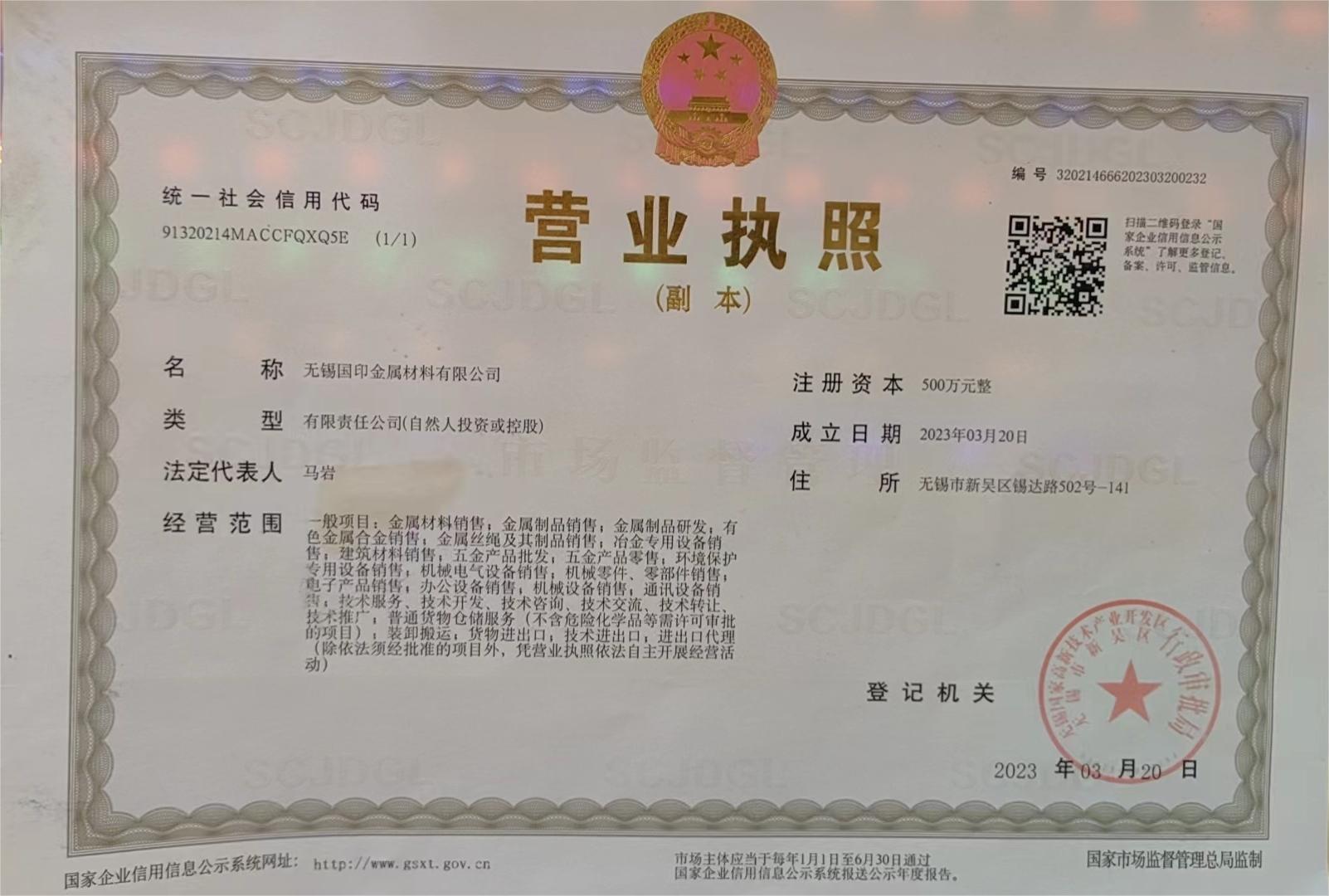
Wuxi Guoyin Metal Materials Co., Ltd.

20
2025
-
03
Color-coated coil: From substrate to coating, a comprehensive analysis of its production process
Author:
Color-coated coil, as a high-quality material widely used in construction, home appliances, transportation and other fields, its production process has gone through multiple fine links from substrate preparation to coating curing. The following is a comprehensive analysis of the production process of color-coated coil:
1. Substrate preparation
Material selection: High-quality steel coil or aluminum coil is the basis for the production of color-coated coil. These substrates usually have good mechanical properties and processing properties, which can meet the application requirements of different fields.
Pretreatment: Before painting, the surface of the substrate needs to be strictly cleaned and pretreated. This includes degreasing, cleaning, pickling and other steps to remove oil, oxides and impurities on the surface to ensure the adhesion of the coating.
2. Coating process
Coating preparation: According to customer needs and application areas, select suitable coatings for preparation. These coatings usually have good weather resistance, corrosion resistance and decorative properties.
Coating method: The coating process can be roller coating, spray coating and other methods. Roller coating is widely used because of its continuous and uniform characteristics. During the coating process, it is necessary to ensure that the coating thickness is uniform to avoid missing coating or excessive coating.
Number of coatings: The number of coatings for color-coated coils can be customized according to customer needs. Generally speaking, color-coated coils with one coating and one baking have a shorter service life, while color-coated coils with two coatings and two baking have a longer service life and better performance.
3. Curing treatment
High temperature curing: The coated substrate needs to enter the curing furnace for high temperature curing. The purpose of this step is to fully combine the coating with the substrate to improve its durability and corrosion resistance. The curing temperature and time need to be adjusted according to the type and performance of the coating.
Air cooling and cooling: After the curing is completed, the color-coated coil needs to be cooled by air to ensure that its surface temperature drops rapidly to avoid deformation or cracking during subsequent processing.
4. Inspection and packaging
Quality inspection: During the production process, multiple quality inspections are required. This includes inspections of the uniformity, thickness, color and gloss of the coating, as well as performance tests such as bending tests, impact tests and corrosion resistance tests. These inspection steps can ensure that the quality of each roll of color-coated coil meets the standards.
Packaging: Color-coated coils that have passed the quality inspection need to be packaged. Packaging materials usually choose moisture-proof and dust-proof plastic films or paper bags. During the packaging process, it is necessary to protect the surface of the color-coated coil from damage and ensure that it is convenient for transportation and storage.
In summary, the production process of color-coated coils has gone through multiple delicate links from substrate preparation to coating curing. These links are interrelated and mutually restricted, and together determine the quality and performance of the color-coated coils. Therefore, the quality and technical parameters of each link need to be strictly controlled during the production process to ensure the high quality and reliability of the final product.
Key words:
Related news
Wuxi Guoyin Metal Materials Co., Ltd.
E-mail: sales01@guoyinmetal.com
WhatsApp: +86-17663729118
Tel: +86-17663729118
Address:No. 502-141, Xida Road, Xinwu District, Wuxi City, Jiangsu Province